Starting too late
Pages and ads launch after demand has peaked.
Termite, mosquito and rodent demand varies by climate, region and time of year. We help US pest-control companies plan locally relevant campaigns across content, landing pages, ads and lead follow-up before expected seasonal demand, then measure and adjust performance.
Free review of your website, Google visibility and lead path. No obligation.

Pest pressure varies by region, climate and time of year across the United States. Search interest for termites, mosquitoes, rodents and other pests can rise and fall locally. Planning relevant pages, offers and campaigns ahead of expected demand gives your team time to prepare and measure results.
Reacting once demand has spiked means competing with everyone who launched earlier. Planning ahead gives pages time to be indexed, trusted and tested before the season starts.
Usually the problem is timing and coordination.
Pages and ads launch after demand has peaked.
Seasonal traffic lands on a generic page.
Spend stays flat while demand moves.
Campaigns generate more work than crews can handle.
Learnings and assets are thrown away after the season.
Ads, content and profile say different things.
Four phases from planning to learning.
Research, service-page audit, content creation, tracking, landing page and campaign planning.
Publish content, get pages indexed, launch awareness and build audiences where appropriate.
Increase paid activity where justified, monitor calls, review search terms, improve the page and watch capacity.
Evaluate the campaign, keep evergreen assets, document learnings and plan the next cycle.
Assets that work together.
A dedicated page for the service in demand.
Helpful pieces timed to the season.
Paid search matched to seasonal intent.
Posts and services aligned with the campaign.
Reminders to your audience and customers.
Measurement and fast response during the peak.
Potential assets for a termite push.
Potential assets for a mosquito push.
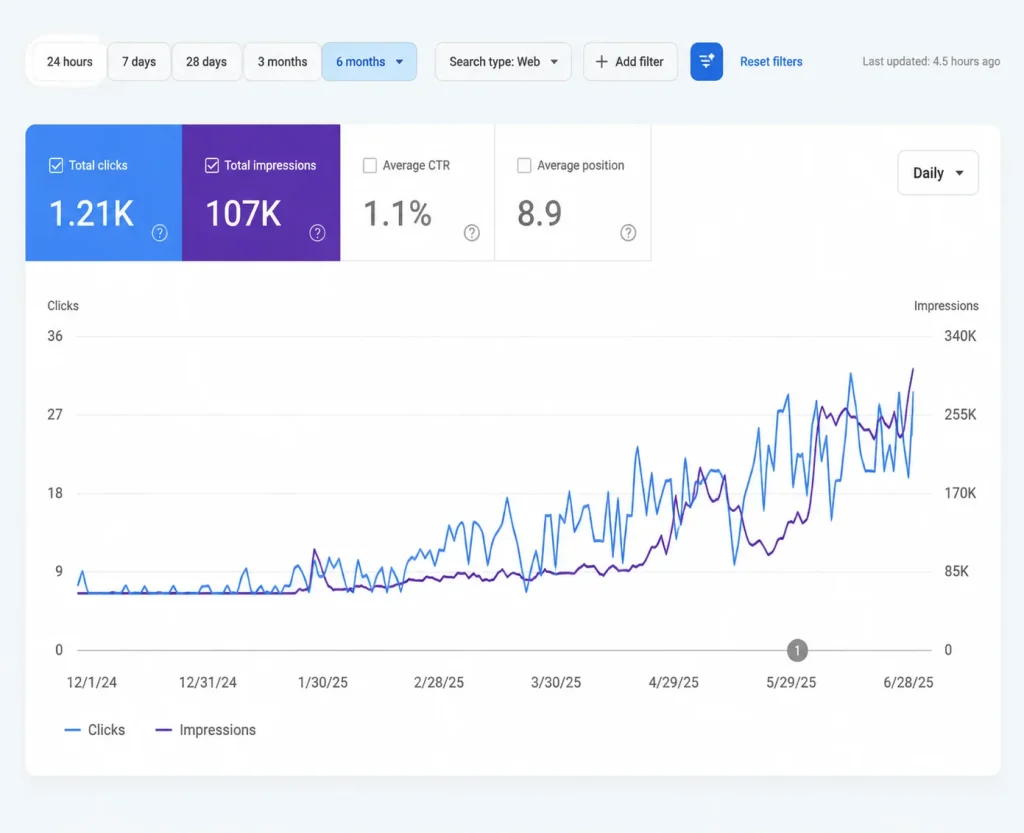
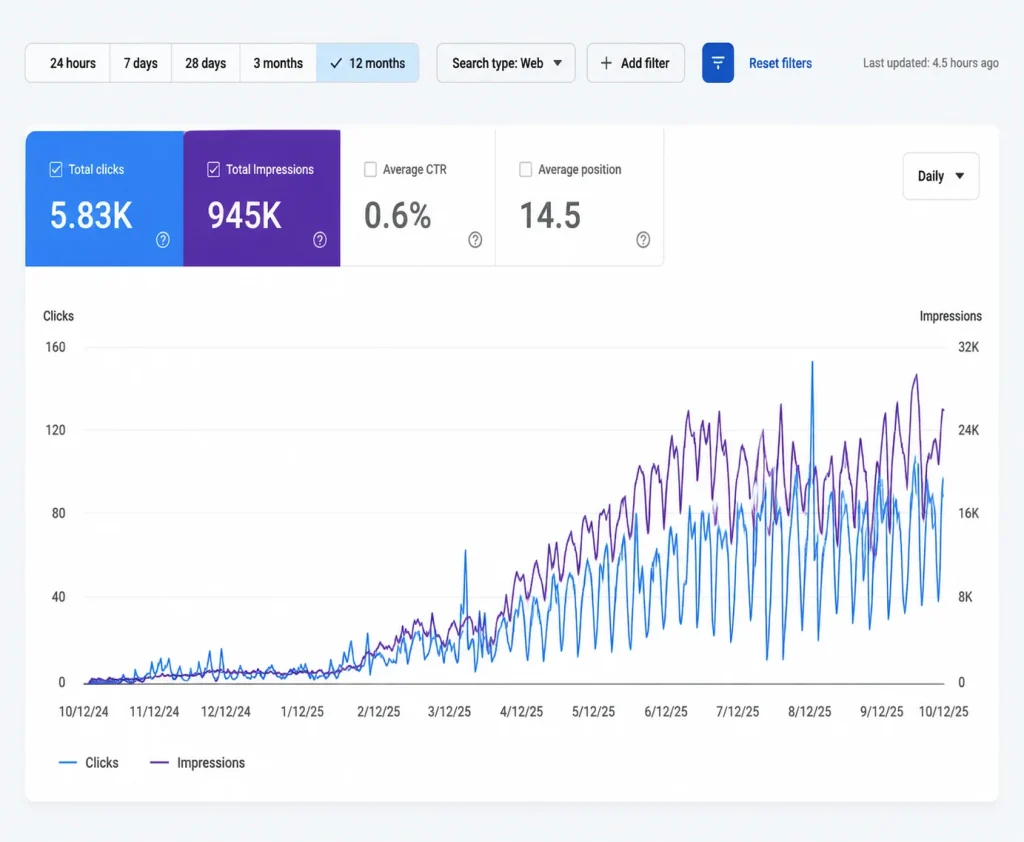
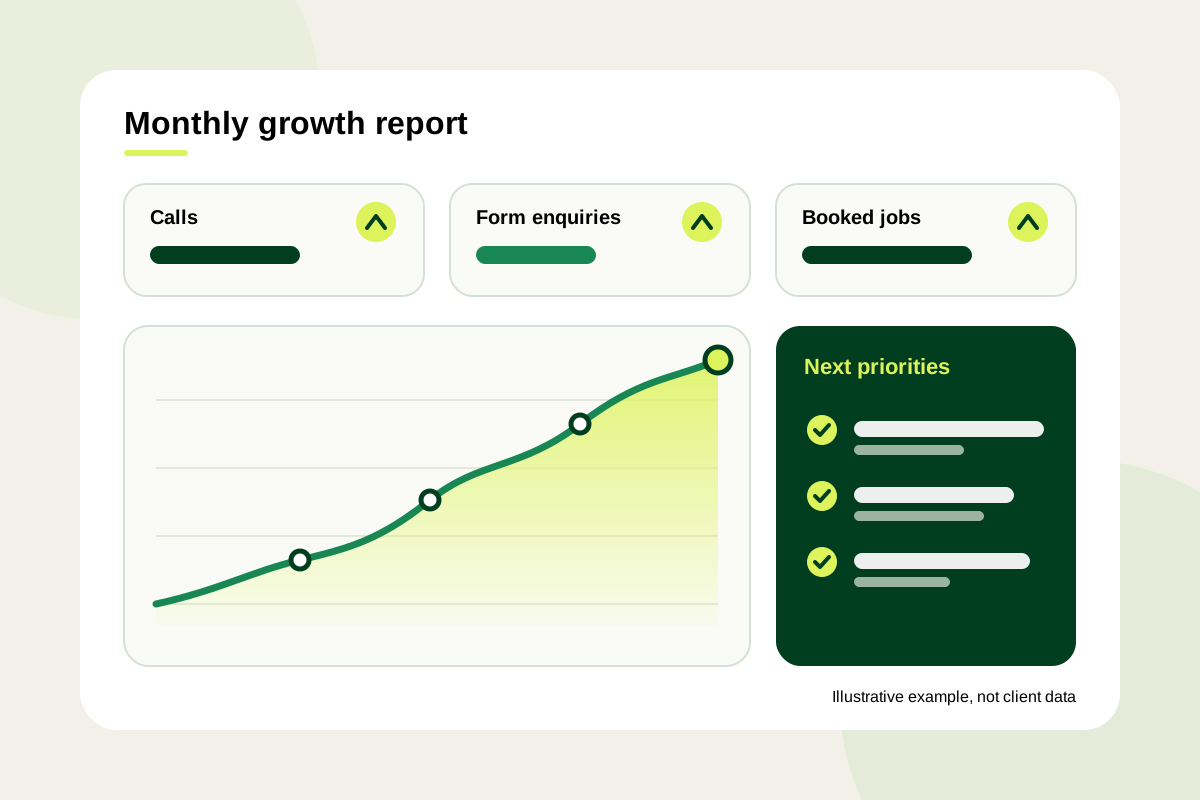
Results by season, compared year to year.
Search Console data makes seasonal patterns visible. In one documented Orlando pest-control engagement, a confidential client recorded 945K Google Search impressions and 5.83K organic clicks over 12 months.
We use patterns like these to time content and campaigns. This is historical performance, not a guarantee for another business.
Depending on engagement scope, this is what you can expect.
Seasonal campaigns work best on top of sound service pages, a strong profile and fast follow-up. If those basics are missing, they usually need fixing first.
Custom campaign scope
Final scope is based on your service mix, local competition, current website condition and required integrations. Paid media budgets are always separate from our fees.
Get Your Free Pest Control Marketing Audit See all starting points
Straight answers before you invest.
Get Your Free Pest Control Marketing AuditIdeally eight to twelve weeks before the expected peak, so pages are indexed and campaigns are tested.
It varies by region and pest. Termite, mosquito and rodent interest all follow patterns we check against your own data.
Usually a dedicated page for the main seasonal service, reused and improved each year.
Scope depends on the services, channels and number of campaigns, so we quote it after a short review.
We monitor results and adjust budgets and messages, and we document what we learn.
Yes. Seasonal work builds on SEO, and the assets keep their value after the season.
Request a practical review of your website, search visibility and enquiry journey. We will identify relevant opportunities and explain the next steps before recommending paid work.
No obligation. No spam. Clear recommendations for your business.
We will review your website, Google Maps visibility and lead-conversion path, then send you three practical opportunities to generate more qualified pest-control enquiries.
No obligation. No spam. Clear recommendations for your business.