Termite Company Marketing: Fill Your Inspection Calendar All Year
Termite company marketing should generate qualified inspection requests throughout the year, not just calls during a local swarm. Match seasonal demand with accurate termite service pages, trustworthy local profiles, clear inspection booking and careful follow-up. This guide explains which searches to target, when to adjust campaigns and how to measure completed inspections instead of clicks.


Key takeaways
- Build the calendar around local species and technician capacity.
- Sell a clearly described inspection, not an unsupported diagnosis.
- Separate swarm searches from monitoring and renewal needs.
- Measure qualified inquiries, completed inspections and follow-up.
- Keep offers, reviews and treatment claims accurate.
Why termite company marketing needs a different plan
Termite inquiries differ from routine general-pest calls. A homeowner may notice discarded wings, mud tubes, damaged wood or a swarm and need someone who can inspect the structure, not quote a standard treatment by phone. The US Environmental Protection Agency explains that infestations often go unnoticed until a swarm or construction work reveals damage.
Explain the inspection process, the termite problems your technicians assess, and how customers receive findings and treatment options. Separate an inspection from a confirmed infestation: a photo or web form cannot diagnose a structure. State whether inspections are complimentary, fee-based or credited toward treatment. Never advertise a free inspection with undisclosed conditions.
A useful campaign sells the next responsible step: a scheduled professional inspection. Avoid exaggerated damage claims or promises that one treatment will eliminate every colony. Show how your team investigates, documents and explains the concern before recommending work.
How should termite marketing change through the year?
There is no single national termite swarm calendar. Species, weather and geography influence when people notice winged termites. University of Florida IFAS reports that Formosan subterranean termites in Florida typically swarm from early April through late June, often after sunset, with peak activity in May. That is a species-specific Florida pattern, not a nationwide date.
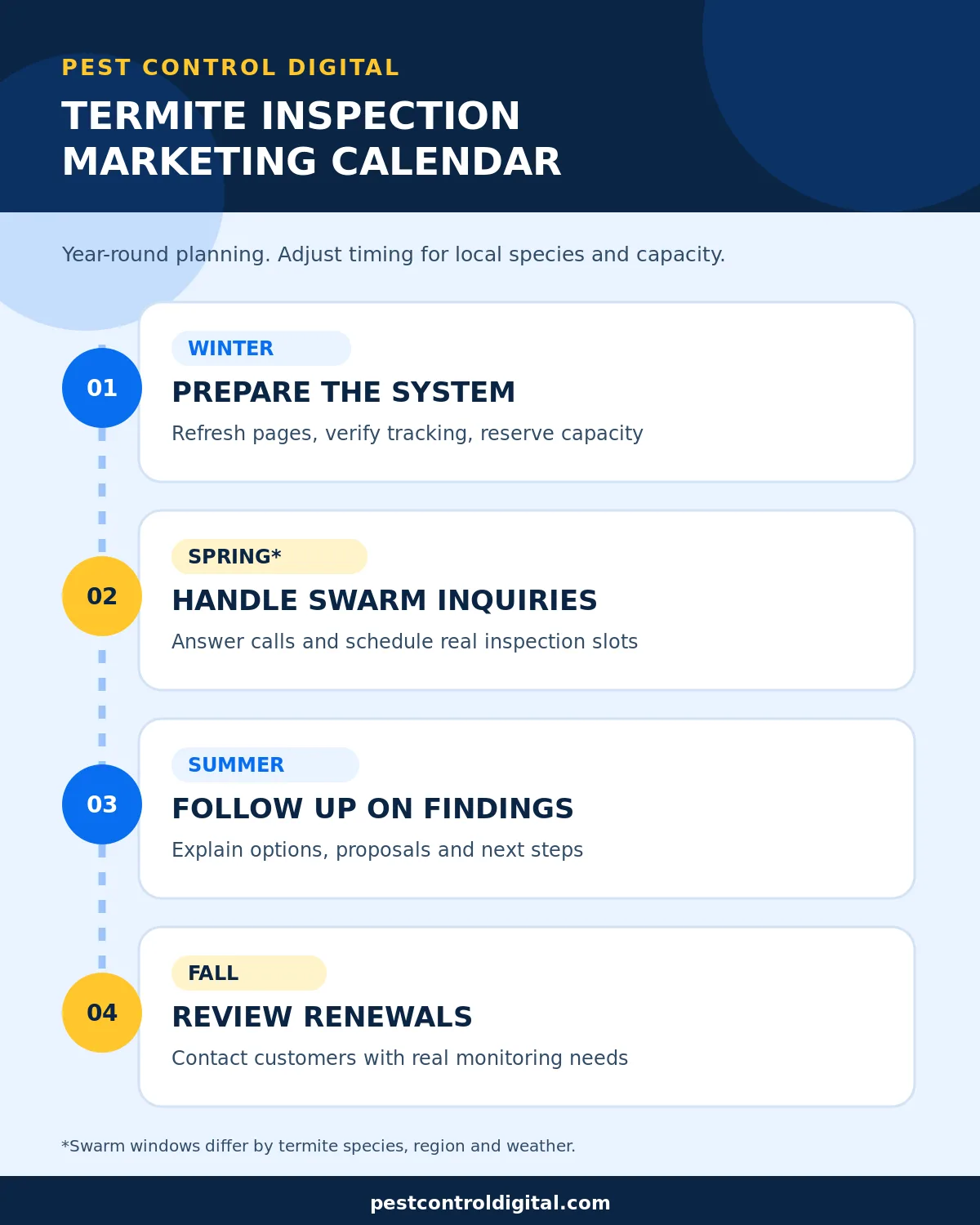
Use historical calls, technician observations and local extension guidance to decide when to publish educational pages or increase advertising. Prepare before a likely seasonal spike so your website and call handling already work. Outside swarm periods, explain inspections, prevention, property transactions and monitoring programs without inventing urgency.
| Planning window | Search themes to prepare | Operational priority |
|---|---|---|
| Winter / pre-season | Inspection, signs, preventive checks | Refresh pages and confirm capacity |
| Spring / local swarm window | Winged termites, swarms, inspection near me | Answer calls and reserve inspection slots |
| Summer | Treatment options, bait systems, follow-up | Explain findings and follow up on proposals |
| Fall / year-end | Monitoring, renewals, property-sale inspection | Contact customers when appropriate |
Editorial planning framework, not measured search volumes. Adjust for your region and termite species.
Do not treat Florida’s Formosan termite swarm window as a nationwide calendar. Confirm species and season locally.
Which termite searches deserve their own pages?
Match each page to the homeowner’s decision. Someone searching “termite inspection near me” wants availability and booking details. A visitor asking about termite droppings needs identification guidance and a professional assessment option. Someone comparing bait systems with liquid treatments wants limitations explained, not a generic sales pitch.
Build a core termite page and add supporting pages only for real services with distinct information. A company that handles subterranean and drywood termites can explain each separately. Avoid cloning city pages with swapped names or claiming offices where you do not operate.
| Customer intent | Helpful content | Next step |
|---|---|---|
| Possible termite signs | Indicators, uncertainty, safety notes | Request inspection |
| Inspection | Coverage, process, fees, availability | Book or call |
| Treatment comparison | Methods offered, assessment required | Discuss findings |
| Renewal or monitoring | Terms, frequency, exclusions | Review existing plan |
Use pest control landing-page improvements to make the inspection request straightforward. Describe work your licensed team actually performs rather than every phrase from a keyword tool.
What should a termite inspection landing page show?
A landing page should answer questions a cautious homeowner asks before allowing a technician onto the property. Show the business name, actual service area, contact method, hours and what happens during an inspection. Verify any license, insurance, warranty or certification claim against current records and state requirements.
Make the phone number tappable and the form short. Ask for name, callback method, ZIP code, property type and a description of the concern. Do not require customers to diagnose a termite species. Offer photo upload only if your system can handle that information appropriately; a photo does not replace an on-site assessment.
Explain what happens after submission. Will a dispatcher call to confirm an appointment? Is there a fee? How are findings documented? Clear expectations can reduce abandoned inquiries and unsuitable bookings. Test the page on a phone using a real call and form submission before purchasing more traffic.
How do Google Maps and reviews support termite inspections?
Local visibility depends partly on whether Google understands a business’s information. Google’s Business Profile guidance identifies relevance, distance and prominence as major local-ranking factors. Paying for advertising does not guarantee a higher organic map position.
Keep the category, genuine service area, hours, phone number and website accurate. Use authentic technician, vehicle and inspection photos when appropriate. Link to a termite page that explains the inspection instead of sending every visitor to an unrelated homepage.
After completed work, invite customers to share honest experiences. Do not ask only happy customers, buy reviews or reward positive feedback. The FTC’s review guidance cautions against selective collection and misleading presentation. See Google Maps SEO for pest control and the Business Profile checklist for practical steps.
A Business Profile or paid campaign cannot guarantee a map position, inspection booking or treatment sale.
When should a termite company use paid search?
Paid search can help when your company has inspection availability, a clear territory and reliable call answering. Start with high-intent searches for inspections and services actually provided. Avoid broad campaigns mixing termite inspections with unrelated wildlife, lawn-care or do-it-yourself traffic unless those audiences are deliberately targeted.
Separate advertising spend from management fees. Review search terms, geographic performance, calls and confirmed bookings. Negative keywords can exclude irrelevant traffic, but careless exclusions may block legitimate questions. A search about a “swarm” may represent a real concern even when the caller cannot identify the insect.
Adjust spending based on staffed capacity rather than assuming spring is always the best month. If appointments are full, a waitlist may be better than buying calls you cannot service. Read the Google Ads pest control budgeting guide before changing campaign settings.
How do you turn inquiries into completed inspections?
Marketing is not finished when the phone rings. Dispatchers should confirm the property is in the service area, determine whether an inspection fits, explain fees and offer a real appointment. Train staff not to promise a diagnosis or treatment price without adequate information.
Use a status pipeline: new inquiry, contacted, qualified, inspection scheduled, completed, proposal sent, accepted or declined. Record why an inquiry cannot proceed. This separates advertising problems from scheduling problems. A high call volume has limited value when most callers cannot reach a person or live outside the territory.
Illustrative example, not an industry benchmark: suppose ten qualified homeowners call and only four obtain appointments because the calendar is full. The immediate improvement may be more inspection slots or better callbacks, not another campaign. Connect phone and form events with pest control conversion tracking where privacy rules allow.
What keeps the inspection calendar active after swarm season?
Termite work does not disappear when swarms become less visible. Owners may request inspections after finding wood damage, during property transactions or when monitoring agreements come up for review. These needs differ from a seasonal swarm rush and deserve distinct explanations.
Follow up with people who requested an inspection but did not choose a time, respecting their communication preferences. For completed inspections, provide written findings and the next agreed step. If a treatment proposal remains open, answer questions without implying that damage has been confirmed when it has not.
For existing monitoring or warranty customers, communicate renewal dates and actual coverage terms. Do not suggest every home needs the same treatment schedule. The EPA recommends periodic inspections and moisture-management measures, while treatment decisions depend on professional findings. A seasonal pest control campaign should align with real customer needs and service obligations.
Send monitoring and renewal messages only when they reflect actual agreements and communication preferences.
Which metrics tell you whether termite marketing works?
Track the inspection journey instead of judging campaigns by clicks. Useful measures include relevant search visibility, qualified phone and form inquiries, inspections booked and completed, treatment proposals, accepted work and renewal opportunities. Separate residential and commercial work when their buying processes differ.
Calculate cost per completed inspection by dividing eligible marketing cost by attributable completed inspections, noting attribution limits. Then review what happens after each inspection. An inexpensive inquiry may be poor value outside your coverage area; a costlier qualified inquiry may justify further testing if it leads to an appropriate appointment. Never assume every inspection becomes a treatment job.
Review results by location, service and source. If ads generate calls but few visits, inspect availability before changing keywords. If organic pages receive visitors but no inquiries, review the next step. A monthly owner report should name costs, qualified opportunities, changes made and the next test.
One useful owner-only check is to compare appointment demand with technician capacity every Monday. Review how many inspection slots are available, how many were filled, how many customers cancelled, and how quickly staff returned missed calls. If slots are empty but relevant calls are scarce, test visibility and targeting. If slots are full and inquiries wait unanswered, adjust scheduling before increasing bids. This operational review prevents marketing from being judged separately from the work it is meant to support.
How Pest Control Digital helps termite companies
Pest Control Digital can review termite service pages, local visibility, paid-search setup and the inspection inquiry process as one system. Start with a practical audit: which searches match actual services, where people abandon booking, and which improvements fit technician capacity.
Explore the pest control business types we support and request a free growth audit. The goal is better-informed marketing decisions and a more manageable inspection pipeline, not a guaranteed ranking or appointment count.
Different pests need different calendars. Our mosquito control marketing guide explains how to prepare campaigns around local activity and available technicians.
Frequently asked questions
When should termite companies start marketing for swarm season?
Prepare pages, staffing and tracking before your local species usually swarm. The right date depends on geography, species and weather. Use local extension guidance and prior call patterns instead of a nationwide calendar.
Should I advertise a free termite inspection?
Only if your business genuinely provides one and discloses eligibility limits. If there is a charge, state it before booking. A transparent inspection offer is more useful than a misleading headline.
Do termite companies need separate pages for every city?
Not automatically. Create location pages only when you serve the area and can provide meaningful local information. Repeated near-identical pages with swapped city names add little value for customers.
What if customers cannot identify the insect they found?
Invite them to describe the signs and request professional assessment. A website can explain common indicators, but a photograph or brief description should not be presented as a definitive diagnosis.
Are Google reviews enough to rank for termite inspections?
No. Google describes local ranking through relevance, distance and prominence; reviews are only one possible signal. Accurate business information, helpful pages and customer service matter too. Rankings cannot be guaranteed.
How should I measure a termite marketing campaign?
Count qualified inquiries, completed inspections, proposals and accepted work, recording costs and attribution limits. Compare results with actual capacity and job economics. Clicks or raw call totals alone do not establish profitable growth.
Want a steadier termite inspection pipeline?
Get a practical review of your service pages, local search presence and booking process.
Sources and methodology
Seasonal timing is species-specific. Tables are editorial planning frameworks, not measured search volumes or guaranteed lead forecasts.